Maturity Means No Excuses

In the law, the state doesn’t hold minors responsible for some of their actions.  If a bank agrees to give a 16 year old a credit card, that 16 year old isn’t liable for his debts because the law assumes he doesn’t have the ability to appreciate his own actions.  The law excuses him from taking responsibility.

Some people carry this idea that they can be excused from responsibility into adulthood.  They make excuses for everything.  They make excuses for why they’ll fail before they even start.  “Well, I’ll do this project, but I’ve got this thing going on too, so no guarantees.”  It’s pathetic, but it’s ingrained in most of us.

The core of excuse making is an attempt to preserve ego.  People fear that if they fail, they won’t be loved or trusted or respected.  So they invent reasons why the failure wasn’t their fault.

The irony is twofold:

(1) the feverish attempt to deflect responsibility by spreading the failure around like unwanted peas on a dinner plate prevents you from actually learning from the failure.  You’re so busy keeping your head down, avoiding suspicion, that there’s no time or opportunity to investigate why you failed.  Major opportunity, lost.

(2) Making excuses is precisely what causes others to lose love, trust, or respect for people.  Everybody fails: it’s ubiquitous.  Nobody likes to fail, but it’s just part of the game.  Making excuses doesn’t have to be.  When you make excuses, you’re ensuring the outcome you don’t want (losing face, respect, trust, and love), will be exactly the one you get.

Posted in Advice, Business, Food For Thought, Inspiration, Law, Rationality, Relationships, Self-Improvement | Tagged , , , , | 1 Comment

Pay People To Insult You

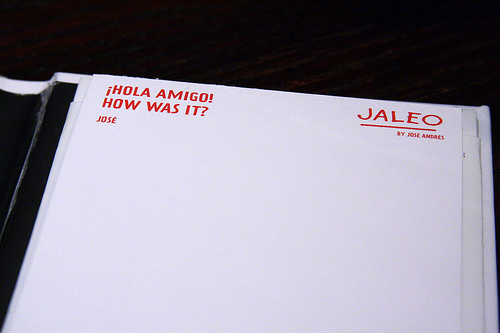
Feedback Form

Here in California, nobody sends anything back at restaurants.  Even when the food is terrible or prepared totally incorrectly, most people refuse to send it back.  This isn’t a regional phenomenon either.  Even in New York, the bastion of speak-your-mind-straight-shooters, the number of people who send things back is on the decline.

A quick search for “sending back food at a restaurant” returns results like When — if ever — do you send food back? If Ever?! There are more videos and articles about How To Send Food Back than I even thought possible.  What the hell happened to us?  We sailed across the Atlantic to a world unknown, fought off the British, conquered the Wild West, won two World Wars, and we need help sending back a fucking piece of overcooked chicken?

Who cares?  It’s not my job to complain.  You’re an asshole.

By not complaining, you’re doing yourself, and whoever you’re not complaining to, a disservice.  If there’s something actually bad about the food, or the service, or the product, or whatever part of whatever business we’re talking about, complaining can make a huge difference.  If nobody complains, nobody knows that the new sous chef is over-salting everything, or that there’s an annoying bug that won’t let you get back to the last screen, or that the salesman is lying to customers.  If nobody complains, that shit doesn’t get fixed.  People in business want to be told where they’re fucking up, so they can offer you better products and service.

It’s not your duty to rehabilitate the place, or offer free advice. As I tell my guests, I get my revenge in print.

Robert Sietsema, food critic for the Village Voice, asshole

Some people are scared of complaining, maybe because they think they’re being nice or because the chef’s going to spit in their food.  You’re not, and they’re not.  Other people don’t complain because they’re sanctimonious assholes.  You’d rather trash somebody in print, to an audience of millions, than complain to someone’s face?  How righteous.

Don’t Fight: Make It Easy.

Sadly, that’s how people operate today.  They’re unlikely to complain.  If they do, it will likely be on yelp or twitter, where you’ve lost the chance to tell if they’re just a crazy person or actually have legitimate complaints.  I’ll keep ranting, but I don’t expect it to change in the meantime.  So, instead of fighting people’s tendencies, make it easier for them to complain.

I’m seeing more and more comment cards left on restaurant tables or behind the bill.  There are more web surveys popping up after using web pages or apps.  That’s a good start, but I imagine the response rate is horrifically low.  Hell, even low end places like Panda Express figured this out a decade ago: pay people to insult you.

Offer discounts, coupons, perks, or special offers in return for feedback.  Give people multiple ways, and multiple opportunities to leave feedback.  If you can physically interact with customers, for christsake, don’t toss of a “Did you like it?”.  Actually ask people about their experience.  Ask what could be improved.  Ask for criticism.

Ya, it might be scary at first, but it beats wondering what’s going wrong as your business dwindles, and it definitely beats the scramble to reevaluate everything when crisis mode hits.

Posted in Advice, Business, Diet, Food For Thought, Money, Rationality, Relationships | Tagged , , , , , , , , | Leave a comment

Meaningless Impressions

It’s a story about us, people, being persuaded to spend money we don’t have on things we don’t need to create impressions that won’t last on people we don’t care about.

– Peter Jackson, at TEDGlobal 2010

It started with Coach, Godiva Chocolatier, and Cadillac.  “Accessible luxury”, it was called.  Brands that used to be known as luxury goods started making cheaper versions of their products for the masses.  Soon after, other long-time luxury brands like Mercedes and Louis Vuitton jumped on board with $23,000 “luxury” cars and $100 wallets and keychains.  There were a number of stories like Tiffany & Co., which rescued itself by selling a shitload of $100 silver necklaces.

Then something weird happened.  The buying habits of a huge segment of American society began to shift.  Back in the 80’s and 90’s, nobody had big screen TVs and most people didn’t pay more than a couple hundred bucks for a television.  But in the mid-2000’s, a whole segment of the population went out and dropped thousands of dollars on LCD and plasma TVs.  Where people used to scoff at paying a couple of hundred dollars for a Coach purse, teenagers were now buying Louis Vuitton bags at double and triple the price.  You can’t even find jeans under $100 in a lot of stores these days.

What the hell happened to people’s judge of value?  A $600 Louis Vuitton logo purse, which made of plastic, is no more useful than a grocery bag.  $300 jeans don’t last longer or look better than $25 Levi’s.  Hell, they usually don’t last as long as Levi’s because some asshole already took a sandblaster to them.  But, people’s judge of value didn’t change.  What they valued changed.  People started to value what strangers thought about them more than they valued something’s intrinsic worth or usefulness.  People got more pleasure out of how an object made other people feel than how that object made them feel.

The above quote, Fight Club-esque as it may be, is revealing.  These “accessible luxuries” are things we don’t need, bought to create impressions that won’t last on people we don’t care about.  Are your friends going to think better of you because you bought a $700 purse or $200 jeans?  Well, fuck you.  Those are some pretty terrible friends you’ve picked.  If it’s not for your friends, who’s it for?  The hostess at the restaurant?  The angry 400 pound TSA agent yelling at you for taking your shoes off?  That’s ridiculous.

Buying for vanity can be fun.  It can be instant gratification.  But it’s a bad decision.  Long-term, deep gratification is better.  Buy tools.  Invest in yourself.  Bank cash.  Then you’ll have the opportunity to use those tools, skills and cash to create meaningful impressions that last, on the people you care about most.

Posted in Advice, Food For Thought, Inspiration, Money, Quotes, Rationality, Self-Improvement | Tagged , , , , , , | Leave a comment

How To End The Lockouts

Seth Godin is a smart guy.  You know how I know?  Not only does he have great insights and produce great work in his chosen field, he offers great insights into all sorts of different things.

For those who don’t follow sports, both the NFL and the NBA have locked their players out.  This means, unless they reach an agreement soon, the players will not be allowed to play next season’s scheduled games, neither the players or the owners will get to make any money, and each league will lose substantial amounts of money, goodwill, and eyeballs.  So, what’s the solution?

While the lockout/strike/dispute is going on, keep playing. And put all the profit/pay in an escrow account. Week after week, the billions and billions of dollars pile up. The owners see it, the players see it, no one gets it until there’s a deal.

Seeing and counting money you don’t get to touch is a very different story than merely imagining the money you didn’t get to touch, money that’s gone forever… Change the story, change behavior.

What’s the downside?  Since that money now becomes tangible, could this plan have the reverse effect, trigger loss aversion, and make a settlement even harder to reach?

Unlikely.  The dirty secret of both leagues is that everybody needs this money.  Without revenue, owners like Jerry Jones probably won’t even be able to pay the interest bills on his new $1.2 billion stadium.  Players live paycheck to paycheck.  So why not play through, put the money in escrow, and continue to negotiate?

Brilliant, Mr. Godin.

Posted in Advice, Business, Negotiation, Persuasion, Rationality | Tagged , , , , , , , , , | Leave a comment

Steal This Idea: Matching Buyers and Sellers

Today, most marketplaces are extremely competitive, and markets for some goods are near perfect.  But, these marketplaces still rely on competition, pitting parties against each other.  What if we could use the abundance of information we have on consumers and producers to come up with a new way to sell?

I’m in the market for a chamber vacuum sealer.  These suckers are expensive, ranging from $600 to $4k for a unit that’s usable in a home kitchen.  So, in addition to ebay and other web stores, of course I check out Amazon to see their price.  But, Amazon adjusts its prices every single day.  Two days after I first checked, the price dropped $200.  Weird, right?  Are they watching me?  Trying to entice me to buy?

Well, why not?  If someone’s got inventory they need to move, why not target great offers at those who are clearly interested (tracked by repeat page visits, or wishlists, for instance).  Instead of indiscriminately lowering the price across the board, this could be a way to reward loyal shoppers, and possibly generate more revenue than if you simply sliced $200 off the price and hope someone snaps up your remaining inventory.  Who wouldn’t love to receive an email that says something like “Hey A.J., we need to move these last 4 units, so we’re willing to knock $150 off the price just for you.”?  That could generate some serious, Zappos-level goodwill.

It seems like there’s going to be a tremendous opportunity to match buyers and sellers this way in the next few years.

Seems like everybody wins with this one.  Please, somebody, make this happen.

Posted in Advice, Business, Food For Thought, Inspiration | Tagged , , , , , | 2 Comments

No Limit On Better

Harrison Ford, carpenter turned movie star, learned early on to approach everything he did with the mindset of a craftsman. One of his earliest lessons came at the hands of an employer:

“When I was a carpenter, I once worked with this Russian lady architect. I would tell her, ‘Look, I’m terribly sorry, but I want to change that a half inch,’ and she would say, ‘No limit for better.’ I think that is a worthy credo. You keep on going until you get it as close to being right as the time and patience of others will allow.”

Harrison Ford

Solid advice.  I think this attitude needs to be tempered a bit though.  I like how James Cameron once described himself, after being called a perfectionist:

No, I’m a greatist. I only want to do it until it’s great.

Posted in Advice, Creativity, Food For Thought, Inspiration, Productivity, Quotes, Self-Improvement | Tagged , , , , , | Leave a comment

Picking Partners

A partner needs three things: intelligence, energy, and integrity.  If they don’t have the last one, don’t even bother with the first two.

– Warren Buffett

I’m never surprised to learn of a partnership’s demise when I know, hear, or read about someone who goes after the most talented person he can find, regardless of that person’s reputation or history.  Reputations are earned: if everyone you talk to says Steve is an asshole, he’s an asshole.  If Steve has failed to perform, broken up relationships, or been unethical in the past, he’s likely to do it again.  Making good decisions has to start even before a relationship starts.

This applies just as much to personal relationships as it does business.

Posted in Advice, Business, Food For Thought, Future, Quotes, Relationships | Tagged , , , , , , , | Leave a comment

Hacking Hollywood

Hollywood(Photo: vlastula)

Will Smith is, at least according to legendary screenwriter William Goldman, the only real movie star left in the world.  Why?  Well, he’s the only lead actor who seems to guarantee a $150 million gross at the box office.  No other actor can claim anything close to that.  How’d he get there?  In his own words, he figured out the system, then beat it:

Lassiter [his manager] told him, “‘Listen, if we’re going out to L.A., we probably should have a goal,'” Smith says. “I said, ‘I want to be the biggest movie star in the world.'” Lassiter, seeing promise that few others in Hollywood would, took his friend seriously and found a list of the 10 top-grossing movies of all time. “We looked at them and said, O.K., what are the patterns?” Smith recalls. “We realized that 10 out of 10 had special effects. Nine out of 10 had special effects with creatures. Eight out of 10 had special effects with creatures and a love story.”

“I look at movies in their essence,” Smith says. “Will that idea sell? The last man on Earth is the essence of I Am Legend. It’s a concept that’s primal and connects to all those ideas of loneliness and abandonment.”

Read more: time.com

Of course, this hack wasn’t the only key.  Smith admitted in his 60 Minutes interview a few years back that he works tirelessly.  In the Time article he acknowledges that today’s movies break even domestically and make their money overseas.  This means a grueling worldwide marketing campaign, which of course Smith figured out how to hack as well:

He has built his global audience systematically: with each film, Smith introduces himself to a new people, often piggybacking on a local event that will attract worldwide attention. For Men in Black II, he toured in South Korea during the World Cup; for Hitch, he hit Brazil during carnival; for next year’s fallen-superhero tale Hancock, he’s trying to get into Beijing during the Olympics.

Is this shallow, or artistically bankrupt, or a waste of talent?  Maybe.  But it sure as hell worked.  It afforded Smith the opportunity to do whatever he wanted, to make whatever art he could dream up.  He chose to sit on his laurels and continue to pump out the same type of stuff, but that doesn’t mean the technique itself lacks merit.

There are some amazing insights to pick up here.  First, Smith set a goal.  It was huge, but that gave him something to aim at.  Then, he broke down the problem, and figured out how to get there.  Solid decision making.  He didn’t listen to conventional wisdom or care what anybody else had to say.  He just worked his ass off to make it happen.  When he finally got to the top, he kept working his ass off.

His story also reveals a common dilemma: once you’re beloved, it’s hard to take risks that might damage that image.  Will Smith makes plain, and lately pretty shitty, movies.  Sure, every once in a while he makes a Pursuit of Happyness or a Seven Pounds, but if you break those down, they’re still very much in the same mold as his superhero-type movies.  Quentin Tarantino was pursuing Smith hard to play a freed slave seeking revenge on an evil plantation owner in his latest movie Django Unchained, but Smith quickly turned it down.  Why?  An angry black guy hunting down white guys isn’t exactly his style.  We see the same thing pretty frequently with politicians.  When Arnold Schwarzenegger was voted into office as California’s Governor, he came up with some pretty bold plans.  When the citizens vetoed every one of them, he said “fuck it”, pushed back from the table and spend 6 years pursuing vanity projects.

It’s always important to remember why you pursued that goal in the first place.

Posted in Business, Creativity, Food For Thought, Inspiration, Quotes, Self-Improvement | Tagged , , , , , , | Leave a comment

The World’s Most Valuable Skill

It’s not the ability to pick stocks or spot market trends.  It’s not the ability to sniff out which wells will produce oil or which methods will cure cancer.  It’s not the ability to mange people or leverage their talents or maneuver a startup through an IPO.  If you possessed any of these skills, you would certainly be very valuable, but those skills aren’t born in a vacuum.  They’re preceded by one, all-important skill.

Awareness.

Now, I still think curiosity is the key to any sort of sustained success, but you can’t be curious without first being aware.  And being aware is easier than ever.  Sure, today there is more to be aware of, but you don’t need to be a Renaissance Man, keeping up on a wide variety of fields and topics.  Merely being aware of what’s going on in your field of interest, and those that directly affect it, is a good start.

I wanted to become a good landscape photographer.  Though I didn’t know it going in, this required being aware of not only how a camera works, but of how light works, how weather works, of the dynamics of any particular location, of what’s going on when I’m setting up a shot, of what’s in the frame, of what processing tools are available to me, of what printing, matting, and framing techniques are available.  You need to be aware of all of this when you’re planning shots, and when you actually get out in the field.  Without being aware of how these things can affect the outcome, you’re extremely limited in the quality of work you can produce.  If you’re not aware, you’ll never be valuable.

But, this is true for pretty much everything that can produce value.  In law, you have to constantly be aware of hundreds of little rules, brand new rules, old rules, how those rules affect things, how to get around rules, etc.  In order to be a good cook, you have to be aware of everything going on around you, from how you’re cutting the meat,  to how much salt to add, to how long the sauce has been simmering, to how much heat to apply, etc. etc.  Same with coding.  Same with stock picking.  Same with, same with, same with.

Like anything else, awareness takes practice, but the practice works.  I don’t have a lot of time to photograph these days, but anytime I walk outside, I still notice what the clouds are doing, how the air is moving, and whether the sunset looks promising.  I don’t even have to consciously think about it anymore, it just pops into my brain.

So, slow down.  Open your eyes.  Pay attention.  Notice.  As my old negotiations professor would say, “notice what you’re noticing.”  With practice, awareness is the easiest thing in the world, and the results can be world-changing.

Posted in Advice, Art, Business, Creativity, Food For Thought, Inspiration, Law, Negotiation, Photography, Rationality, Self-Improvement | Tagged , , , , , , , , | 5 Comments

Passion Does Not Cause Success

Nearly everyone I went to law school with was there because they hadn’t figured out what they wanted to do with their lives.  It wasn’t that they were passionate about law, or putting bad guys away, or freeing the innocently convicted, but that they hadn’t found anything else they liked doing yet, or couldn’t get paid to do it.  In addition to an education, they were literally buying time.  But, very few people who go into law school without a passion come out with one.  They might get a diploma, and if they’re lucky, a job, but that feeling in the pit of their stomach that they don’t know what the hell they’re doing with their lives remains.  Shit.

The problem is misunderstanding cause and effect.

Nobody is born passionate about anything.  Nobody. There’s no 3-year-old boy who became passionate about golf before he ever picked up a putter.  No 9-year-old boy ever became passionate about baking before he cracked an egg.  No 10-year-old girl ever became passionate about racing before she ever got in a kart.  Tiger woods became passionate about golf after the feeling he got slamming balls off a tee and draining putts.  Thomas Keller became passionate about cuisine after he made a perfect hollandaise sauce.  Danica Patrick became passionate about racing after tasting success on the karting circuit.

Passion does not cause success.  Success causes passion.

Our brains are wired to crave success.  They release the same endorphins when we taste success as they do when we eat chocolate cake, or have sex.  It’s not surprising then that the things we find some success at, we become passionate about.  Which breeds more success.  Which makes us more passionate.  Which breeds more success.

This should come as fantastic news.  It means anyone can be passionate about anything.  Hell, I’ve met wildly passionate janitors and postal workers.  All it takes is trying new things to see if you have any aptitude, or can find even the slightest bit of success in doing those things.  (For more on this, I’d recommend Cal Newport’s excellent How To Be A High School Superstar.  Title aside, it’s an incredibly insightful and useful book for anyone who doesn’t know what they want out of life.)

Don’t skip step one.  Nobody’s born passionate.  Success comes first, usually in tiny quantities.  Try things.  Find something you might have the potential to be good at.  Do a lot of that thing.  Passion will come.

Posted in Advice, Art, Business, Creativity, Food For Thought, Inspiration, Self-Improvement | Tagged , , , , , | 5 Comments

How To Make Good Decisions

There are a lot of people who seem to have miserable luck and tough lives.  They end up with significant others that cheat on them or leave them.  They make bad investments or get caught up in scams.  They have friends or children who are always in trouble and always need help.  They live with constant drama and turmoil.

The thing is, luck doesn’t have anything to do with it.  People with constant bad luck are simply bad decision makers.  People become bad decision makers because they never think about how they make decisions.  They decide impulsively, or with their gut, or because they horoscope is pointing towards Saturn, or based on some equally ridiculous reason.

The key is to think systematically. Every decision you make should flow out of the same basic analysis.

  1. What do you want the outcome to be?
  2. What are the available options that lead to that outcome?
  3. What else might result from each of those available options?
  4. What are the costs and benefits of each of those options?

Then you pick the available option with the greatest benefits.  Simple.  Using systematic thinking like this makes all decisions better, whether you’re trying to decide which blender to buy, which career path to follow, or which woman to marry.

Strangely, even decent decision makers often ignore the first question, particularly on big issues, like “Should I marry this girl?”  I guarantee you Hugh Hefner never asked himself  question number one when he nearly married his last girlfriend.  What would the answer have been?  “I want someone to love and care for me when my health starts to fail.”?  “I want someone who’s going to be a good mother to my kids.”? “I want a nice person who I can enjoy the rest of my time on this planet with.”?  I’m going to guess that the only outcome he was thinking of was “I want to continue to nail this peroxide blonde that looks exactly like the last 47 peroxide blondes I’ve nailed over the last half century because she’s extra good at tickling my balls and doesn’t complain about my halitosis.”  Or something close to that anyways.

The point is, implementing a system by which all your decisions are made will result in better decision making, and a happier life.

Posted in Advice, Art, Business, Creativity, Inspiration, Rationality, Relationships, Self-Improvement | Tagged , , | 6 Comments

Violently Execute

A good plan violently executed right now is far better than a perfect plan executed next week.

General George S. Patton

Most successful people spend a lot of time planning.  But, at a certain point, your plan is good enough.  Hammering out a few more details isn’t going to help.

Take the latest iteration of my once complicated time tracking routine.  I could probably come up with a better system, one that captures efficiency/effectiveness so I could analyze and tweak my study habits.  But the tally marks seem to be working well enough.

Better that I execute on this right now than spend time trying to build the perfect plan by next week.

Posted in Art, Business, Productivity, Self-Improvement | Tagged , , , , , | Leave a comment

When Precision Is Detrimental

Precision is generally good.  It generally feels good.  I’ve used camera lenses that have been precisely machined and mated to particular camera bodies.  They’re about as perfect as can be and they were a joy to use.

Peter Drucker famously said that “What gets measured gets managed.”  Well, we’re getting to the point were we can measure the formerly unimaginable, not just the unmeasurable or even the unknown.


Being able to measure minutely can be wonderful.  The company that produced that video uses their technology to test things to make sure they’re properly manufactured.  That’s good.  Those measurements lead to improvements, which lead to safer airplanes and propane tanks.  But at a certain point, finer and more accurate measurements don’t produce worthwhile improvements.  Bloggers have talked about this for a while now (“Don’t pour more time into SEO; pour more time into writing great content!”), but it applies to every industry.  Your products could always be more precise.  There is always stuff to tune, or to fix, or to improve to that nth degree.

Don’t let precision be an excuse for not shipping.

Posted in Art, Business, Creativity, Food For Thought, Inspiration, Productivity, Quotes, Rationality, Self-Improvement | Tagged , , , | 1 Comment

Time Tracking, version 4

I love this new addition to my time tracking routine, courtesy of author and Study Hack maven Cal Newport: the tally system.

The Tally System for Time TrackingIt’s extremely simple.  Identify a core task.  Put a tally mark down for each uninterrupted hour you spend on that core task.

For me, my only task right now is studying for the California bar exam.  I’ve got four weeks left and a lot yet to memorize.  The best way to learn this stuff is repetition.  That requires that you put in a lot of hours.

The tally marks make it extremely easy to keep track of the hours, and gives you an easy visual metric to compare how you’re doing each day, week, or month, depending on how you set it up.


Posted in Advice, Productivity, Self-Improvement | Tagged , , , | Leave a comment

Use Terrible Singing To Strengthen Relationships

Everyone likes to be thought of, to be recognized, and to be remembered.  When’s the best time to show some appreciation for those people you care about?  Holidays, like Christmas and Thanksgiving, are fine, but eminently forgettable.  Everyone calls or sends cards on those holidays.  Nobody will remember if you called or wrote when they got 815 other cards and phone calls.

Birthdays are best.  As people get older, there is this sense that birthdays aren’t as important, or that people don’t want to be reminded of their age.  To the first point, birthdays aren’t as important: getting a license at 16 or shitfaced at 21 was a big deal.  Getting more pronounced crows feet at 37 isn’t.  But, people still like to be thought of and appreciated.  And, best of all, because everyone else forgets about birthdays, or is a few days late, your call will definitely be remembered.  I love this idea from Keith Ferrazzi:

Generally, I like to make birthday calls in the early morning.  This way I get someone’s voice mail, and when they come in to work that morning, they’re greeted with my rendition of “Happy Birthday”.

No greetings.  No Niceties.  I just let it rip.

I’ve done this a couple times now, and it really works.  Everyone loves to be thought of on their birthday, and getting a horribly sung birthday song is a nice, subtle, way to show that you care enough about the person to make an ass out of yourself.

Business Idea

Here’s the problem though: a lot of folks don’t have dedicated business phones anymore, or their phones are forwarded to their cell phones.  A lot of people leave their cell phones on all night.  I don’t want to wake some poor, hung-over, post-celebration friend at 5:30 in the morning just so I can scream a horrible rendition of Happy Birthday at him.  I want to be able to dial a number so it goes straight to voicemail.

Update: Apparently slydial.com is an app that will do this.  Cool!

Posted in Advice, Business, Quotes, Relationships, Self-Improvement | Tagged , , , , , , | Leave a comment