Windows and Orbitz provide totally open experiences: you can have whatever you like, anything is possible, but you’re going to have to work for it.
Apple and Abercrombie & Kent chose a different direction: both provide totally tailored, curated experiences. Someone has thought out nearly every detail for you.
People have shown that they like the Apple experience. They like things that are well designed, planned out, and simply work without much input from them. They don’t seem to mind the limited options that inherently come with a closed system. In fact, people seem to care so little, Apple is now the second largest company in the world, by market cap.
One of the interesting things about Apple, as well as many other high end or luxury brands, is that they don’t really sell you, but invite you to buy. When you walk into an Apple Store, someone almost immediately asks you if they can help you find something. There’s not a whole lot of selling involved. There’s no need: there’s a line of people out the door waiting to cash in their invite to buy.
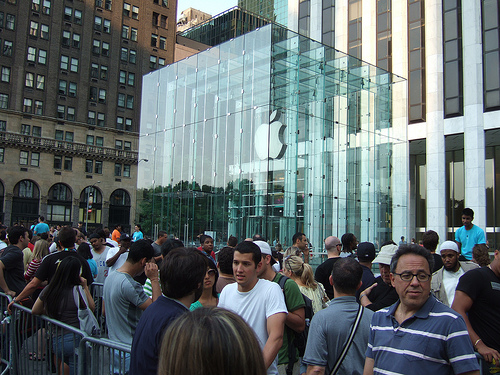
Microsoft, on the other hand, literally has to go and build a store in a customer’s house to get them to buy. This isn’t selling so much as it’s duress.
What is it that’s put Apple and other brands in such a position to merely have to invite customers rather than convince them to buy? Obviously their marketing works.
I just picked up a new book called Fascinate that may provide some answers. I’m only a few pages in, but it’s pretty intriguing.
 .
.
I think the book you were seeking to answer this question is Positioning: The Battle For Your Mind.
Cheers.